
Accurate motion feedback in heavy industrial environments has traditionally relied on a combination of encoders, limit switches and mechanical overspeed devices. While proven, this layered approach can introduce complexity, multiple failure points and susceptibility to electrical interference. Recent encoder architectures are addressing these challenges by consolidating multiple functions into a single, configurable system.
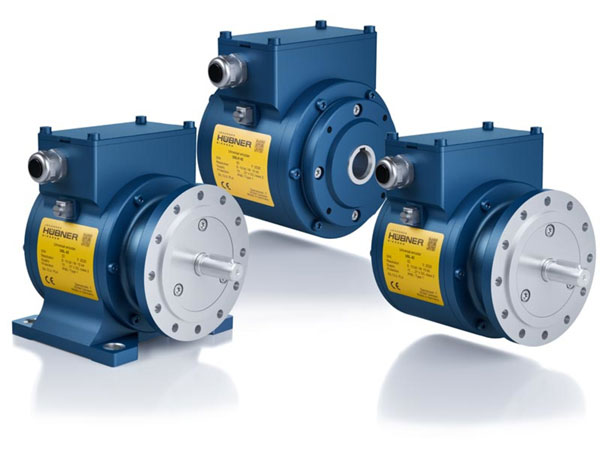
One example is the U-One universal encoder platform from Johannes Hübner Giessen, designed specifically for applications such as cranes, hoists, rolling mills and other high-duty machinery. The U-One has multiple benefits, including SIL rating as standard, combined incremental and absolute outputs, up to twelve switching points, with the additional benefit of electronic overspeed and underspeed functionality.
The above benefits, and the fact that the units are programmable via USB through the supplied software, mean that testing and calibration can be done in still stand, reducing downtime for customers, and giving assurance that every aspect is functioning correctly.
The U-One basic unit, with fibre-optic transmission to the control modules located in the switchboard, provides inherent immunity to electromagnetic interference, making it suitable for installations with long cable runs and high current equipment. It also allows sensitive electronics to be housed away from vibration, temperature extremes and contamination.
A recent hoist drum application highlights the benefits of this approach. In a steel plant environment, the U-One system replaced mechanical cam switches, improving positioning accuracy and long-term reliability. Integrated overspeed monitoring enabled immediate brake activation under fault conditions, enhancing operational safety while reducing mechanical wear and maintenance requirements.
For engineers working in the UK and Ireland, the U-One encoder system is supported locally by Barlow Technology, who supply feedback and sensing solutions to heavy industry sectors including metals, mining, ports and energy. As machinery designers continue to prioritise system reliability, safety integration and reduced installation complexity, encoder platforms that combine robustness with functional flexibility are likely to become an increasingly common feature in advanced drive systems.